A few days ago, I was at a small restaurant near my home when I noticed something I hadn't seen before.
Not the food.
Not the interiors.
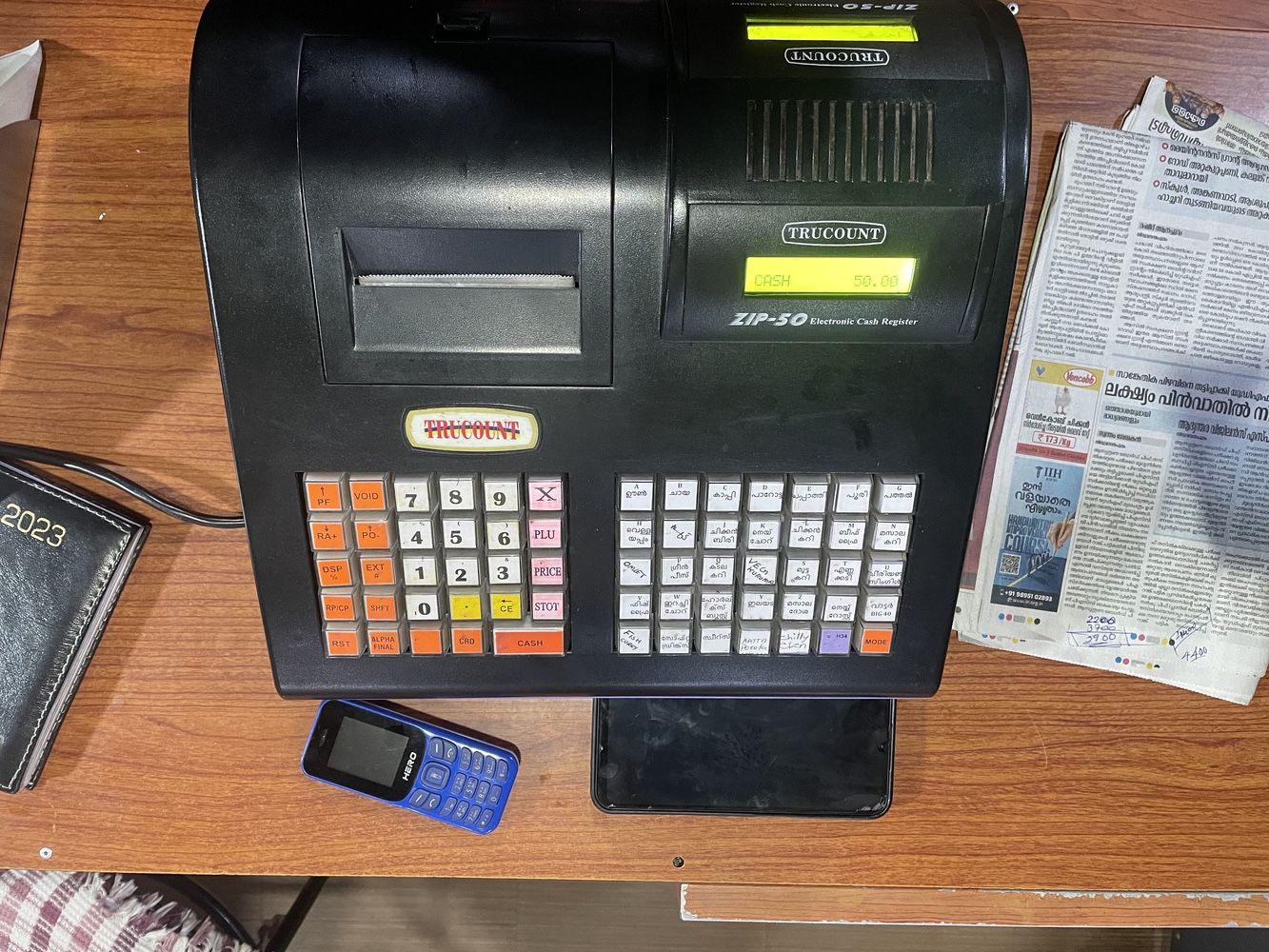
The billing machine.
At first glance, it looked like an ordinary electronic cash register.
Black plastic body.
Small monochrome display.
Mechanical keys.
Nothing about it stood out.
Until I looked closer.
Every key had been relabeled in Malayalam.
ചായ.
കാപ്പി.
പരോട്ട.
ബീഫ്.
The original English labels weren't scratched off or covered with tape.
Instead, each transparent keycap could be opened, allowing a small printed label to be slipped inside.
Every button now represented something this particular restaurant sold.
It wasn't flashy.
It wasn't connected to the internet.
It wasn't powered by AI.
But it was one of the most thoughtful pieces of product design I've seen in a while.
At first, I thought this was a story about accessibility.
The more I thought about it, the more I realized it was actually about respect.
Respect is one of the most underrated principles in product design.
The restaurant owner might be an incredible cook.
He probably knows exactly how long to roast spices.
How to manage a busy kitchen.
How to serve hundreds of customers every day.
He might have spent decades perfecting his craft.
But he may not be comfortable reading English.
That doesn't make him less capable.
English simply isn't the language through which he works.
The designers understood that.
Instead of expecting the owner to learn the language of the machine...
They allowed the machine to speak the language of the owner.
That's what struck me the most.
This isn't really a Malayalam interface.
It's an interface built on respect.
Respect for local language.
Respect for local businesses.
Respect for the environment this product would eventually live in.
We often design products as though they'll exist in perfect conditions.
Clean desks.
Bright offices.
Users who read every instruction.
Users who understand every menu.
Reality is rarely like that.
A cash register doesn't live in a design studio.
It lives in noisy restaurants.
Crowded bakeries.
Small grocery stores.
Roadside tea shops.
Family-run businesses.
It becomes part of someone else's routine.
Good design respects that routine instead of interrupting it.
The clever part wasn't even the language.
It was the hardware.
The designers didn't permanently print labels onto the keys.
They designed transparent keycaps that could be opened and customized.
The same machine could become a restaurant billing system.
Or a bakery.
Or a hardware store.
Or a textile shop.
The hardware stays exactly the same.
Only the vocabulary changes.
That's an elegant design decision.
The company couldn't possibly know every language.
Or every menu.
Or every business that would eventually buy this machine.
So instead of trying to predict every possible use case...
They designed a system that expected people to make it their own.
The product wasn't finished when it left the factory.
It was designed to evolve in the hands of its owner.
We often celebrate products because they're smart.
AI.
Automation.
Personalization.
Cloud connectivity.
This machine has none of those things.
Yet it's incredibly thoughtful.
Thoughtfulness isn't measured by processing power.
It's measured by how well a product understands the people using it.
Sometimes intelligence isn't about adding technology.
It's about removing assumptions.
The assumption that everyone reads English.
The assumption that every business works the same way.
The assumption that users should adapt to products instead of products adapting to users.
Someone had to decide that these transparent keycaps were worth making.
Someone imagined a restaurant owner printing labels in Malayalam.
Cutting them with a pair of scissors.
Sliding them into each key.
Building an interface that finally felt like his own.
That isn't just engineering.
That's respect.
The best products don't always look revolutionary.
Sometimes they're quiet.
Sometimes they're almost invisible.
Sometimes they're simply designed with enough humility to acknowledge the world they're entering.
This cash register doesn't try to teach its users a new language.
It doesn't ask them to change decades of habit.
It quietly says,
"We'll meet you where you are."
I think that's one of the highest compliments a product can pay its user.
Because good design isn't just about solving problems.
It's about respecting the people and places your product is designed for.